
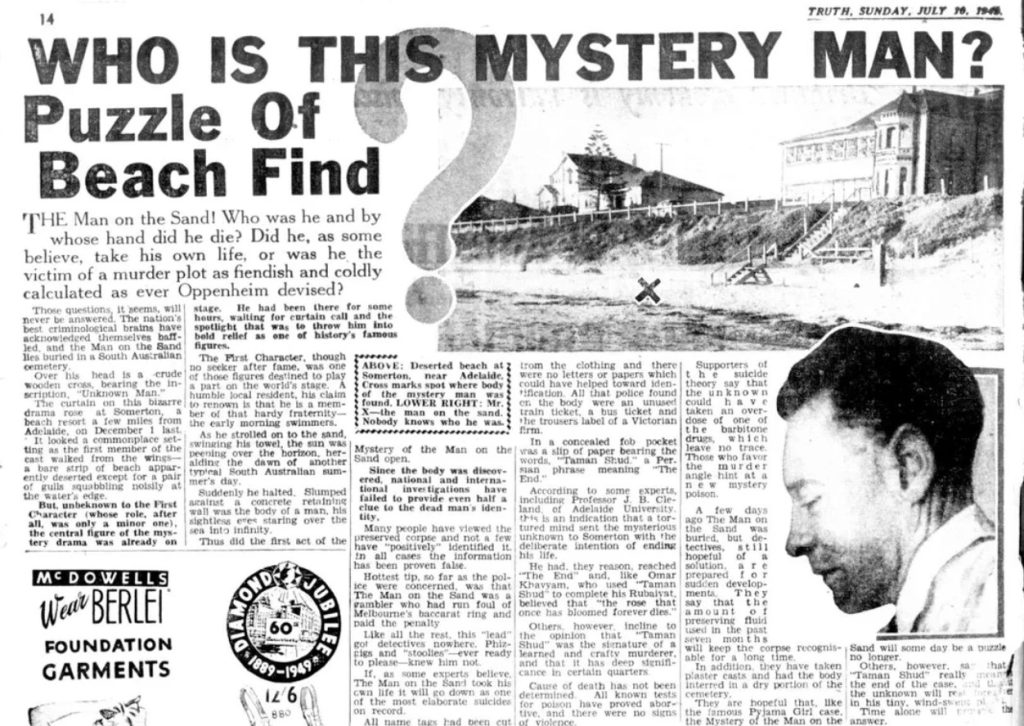
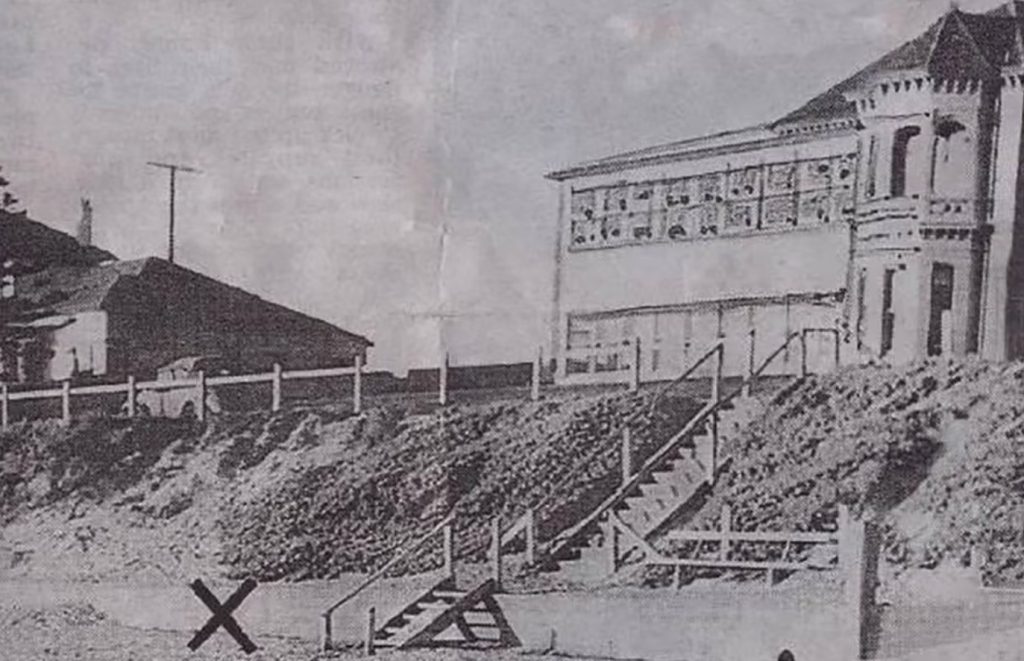
December 1, 1948. A beachgoer walks along Somerton Beach in Adelaide, Australia. The morning sun glints off the waves. And there, slumped against a seawall, sits a man.
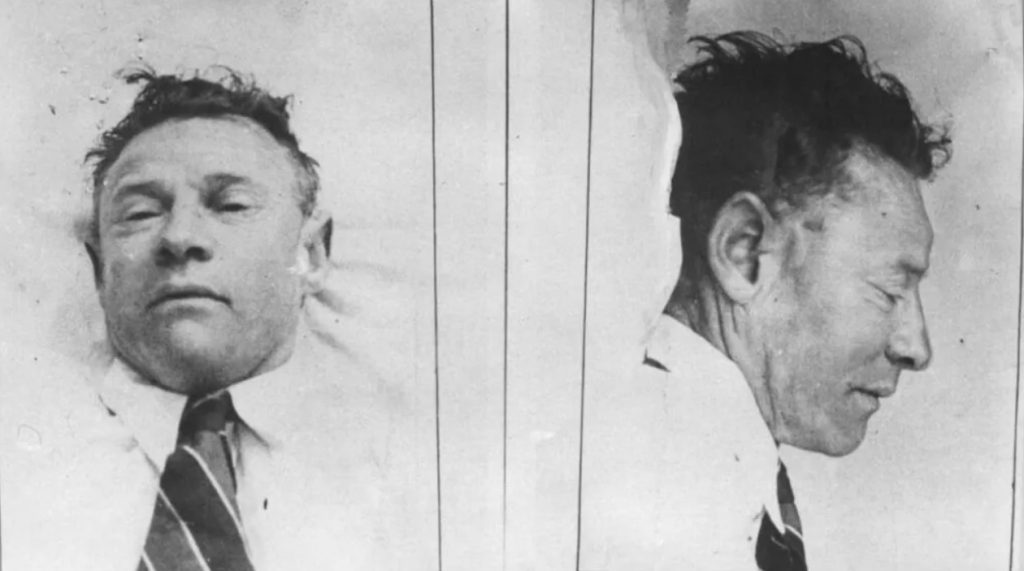
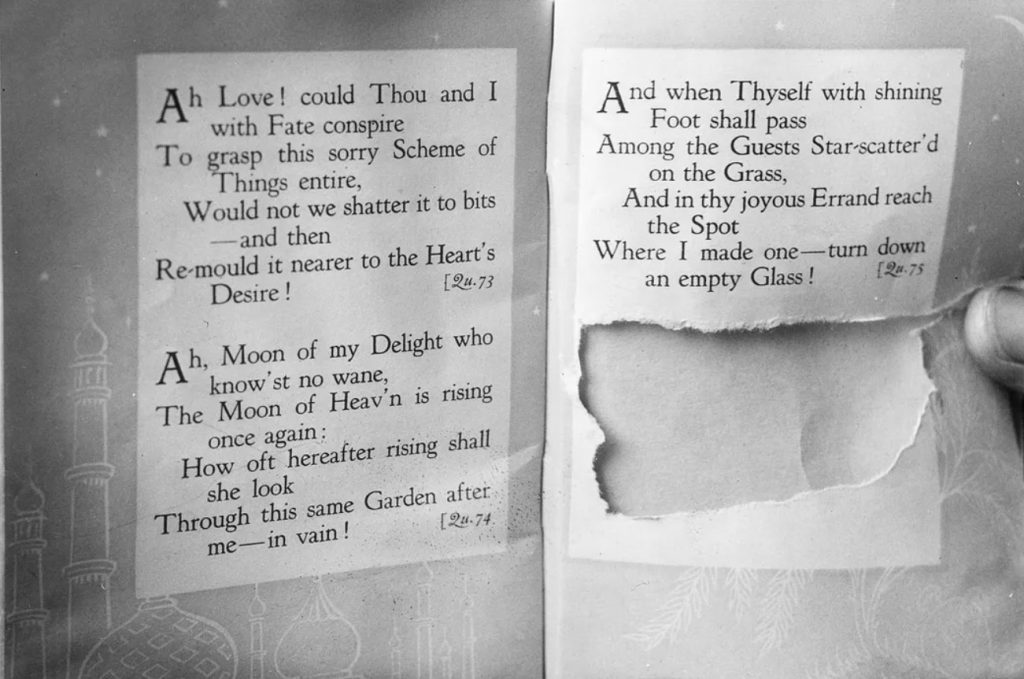
He is well-dressed. Clean-shaven. No signs of violence. His shoes are polished. His shirt is tucked. In his pocket: a used bus ticket, a pack of gum, and a small slip of paper with two words in Persian: “Tamám Shud.”
Translation: “It is finished.”
But nothing about this case would ever be finished.
The Man With No Name
He became known as the Somerton Man—a man in his 40s, fit, with unusually strong calf muscles, suggesting a life of physical labor or climbing. His teeth were in perfect condition, hinting at European or American upbringing. Yet no missing persons report matched him. No fingerprints yielded a name. No scar, tattoo, or document betrayed his identity.
Even his clothing offered no clues. Labels were removed. Tailoring was high-quality—but untraceable. It was as if he had been designed to vanish.
The Book That Held the Key
The phrase “Tamám Shud” comes from The Rubáiyát of Omar Khayyám, a 12th-century Persian poem about fate, transience, and the futility of human striving.
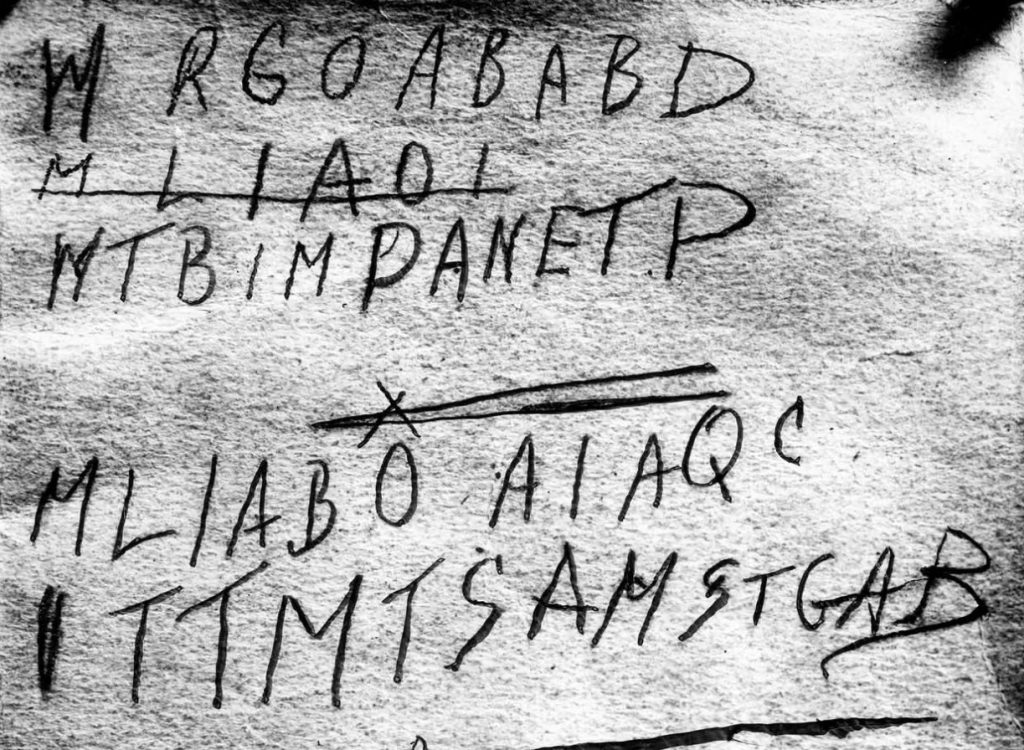
Police launched a public appeal for the book. Weeks later, a man handed over a copy—found in the back of his unlocked car. On the back page, someone had written:
“WRGOABABD
MLIAOI
WTBIMPANETP
MLIABOAIAQC
ITTMTSAMSTGAB”
A 5-line cipher. No key. No punctuation. No spaces.
Over 75 years later, it remains one of the few major codes never broken—despite analysis by Australia’s Defence Signals Directorate, the CIA, and amateur cryptographers worldwide. Even in the age of AI, it resists decryption.
A Death Without a Cause
The autopsy revealed no trauma, no infection, no heart disease. But the pathologist noted something strange: extreme dilation of the pupils and congestion in the liver—symptoms consistent with poisoning.
Yet no known toxin was found.
One theory: digoxin—a heart medication derived from foxglove, undetectable in 1948 autopsies. A “perfect poison.” Fast. Silent. Leave no trace.
But who would use it? And why leave a Persian poem as a calling card?
The Cold War Shadow
1948. The atomic age has begun. The U.S. and USSR race for nuclear secrets. Australia hosts British atomic tests at Woomera and Maralinga.
Could Somerton Man have been a spy?
- He was found hours after the U.S. Consul in Adelaide reported a suspicious inquiry about nuclear shipments.
- Handwriting analysis of the cipher matches no known agency—but resembles Soviet courier scripts of the era.
- In 2013, a retired U.S. codebreaker suggested the cipher might be a one-time pad—the gold standard of Cold War espionage.
And then there’s the woman.
The Nurse from the Book
In the back of *The Rubáiyát*, police found a phone number. It led to a 28-year-old nurse named Jessica Thomson.
She denied knowing the man. Said she’d given the book to a lover during WWII—a soldier named “Alfred Boxall.”
But Boxall was found alive in 1949—with his copy of *The Rubáiyát* intact.
Jessica never explained how her number ended up in the dead man’s book. She changed her name, moved overseas, and refused all interviews until her death in 2007.
Her son later claimed: “She knew who he was. But she took the secret to her grave.”
The DNA Breakthrough—And Its Silence
In 2022, Australian police announced a breakthrough: using DNA from the man’s hair, they identified him as Carl “Charles” Webb, an electrical engineer from Melbourne.
But the announcement raised more questions than answers:
- Why did no family come forward in 74 years?
- Why did Webb’s known life not match the man’s profile (travel, fitness, habits)?
- And most importantly: what does the cipher say?
Police refused to release the full DNA methodology. Independent experts remain skeptical. The name may be real—but the mystery is not solved.
Why the Cipher Still Matters
The Tamám Shud cipher isn’t just a puzzle. It’s a message left in plain sight—by someone who knew it might never be read, but had to be written.
Is it a final note to a lover? A dead drop code? A warning about nuclear secrets? Or simply the last words of a dying man, echoing Khayyám: “The Worldly Hope men set their Hearts upon / Turns Ashes—or it prospers…”
Until the code is broken, we won’t know.
The Archive That Won’t Close
The Somerton Man’s body was buried in an unmarked grave. The cipher remains classified in parts. The nurse’s file is sealed until 2070.
And on Somerton Beach, a small plaque reads: “In memory of an unknown man.”
But his story is far from finished.
Evidence File
Original police photos. Scan of the Tamám Shud cipher. Autopsy report. Photo of *The Rubáiyát* with handwritten code. Jessica Thomson’s redacted file summary.
Compiled from South Australia Police Archives and National Archives of Australia.
📥 Download: The Tamám Shud Case – Official Dossier (PDF)
He carried a poem about endings.
But his mystery never ends.