
Unsolved Files Archive
Eleven and a half thousand years ago, hunter-gatherers cut limestone pillars out of bedrock, the largest of them weighing some eight metric tons, and stood them in circles on a hill in southeastern Turkey. Almost every sentence written about why they did it is now being argued over by the people who dug it up.
Summary
The hill is called Göbekli Tepe, the potbelly hill, and it sits above the Harran plain near Şanlıurfa, close enough to the Syrian border that you can see the haze of it.
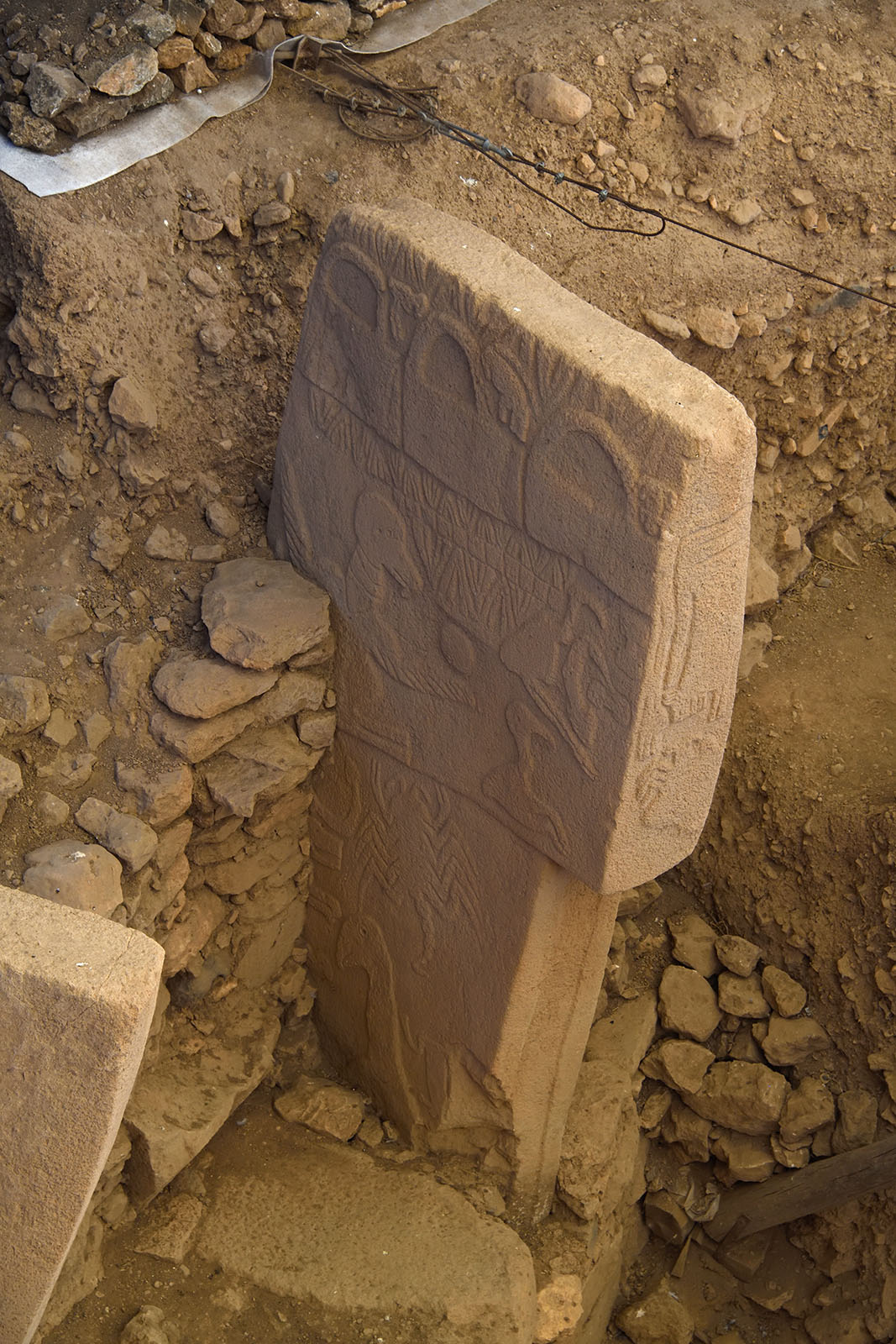
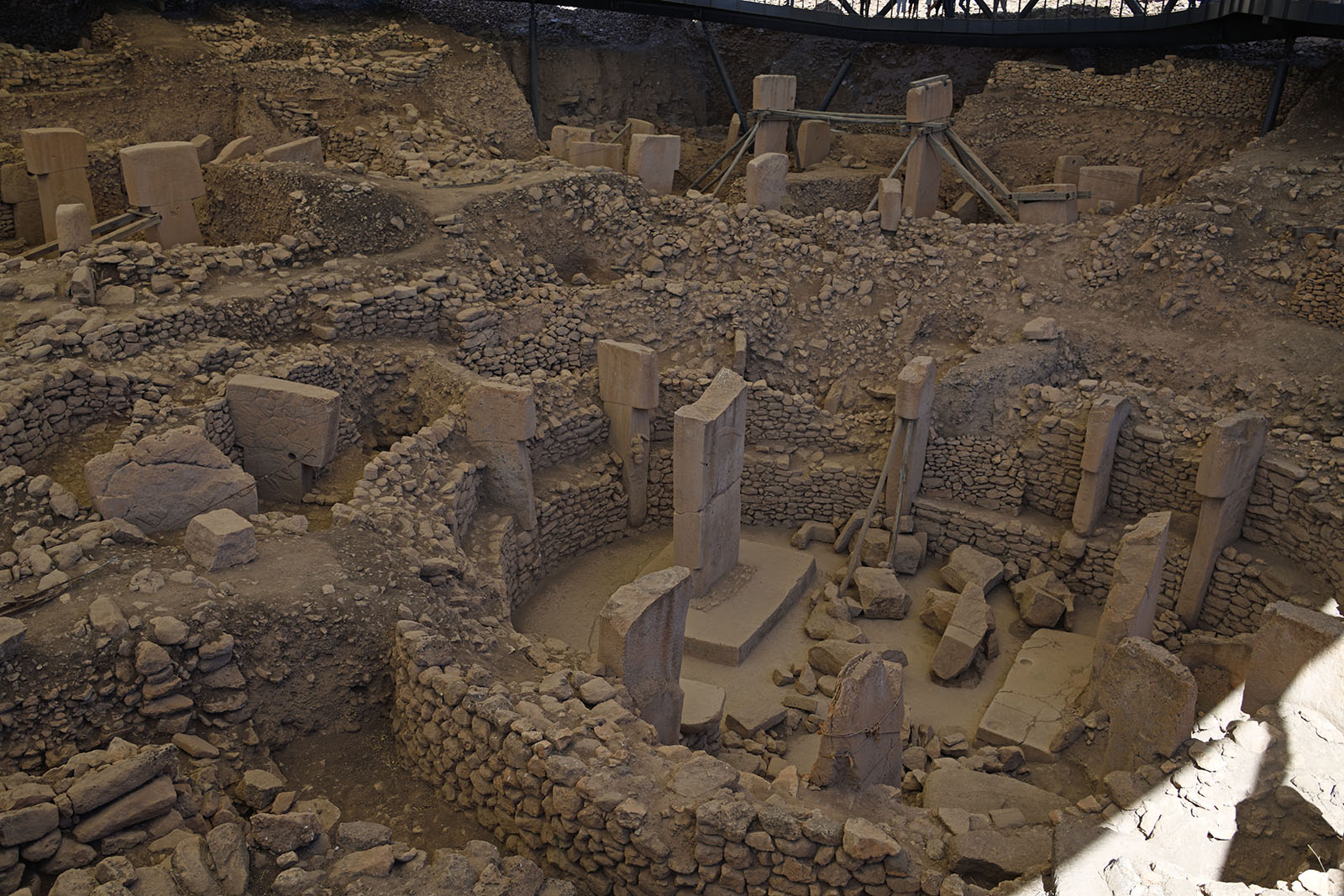
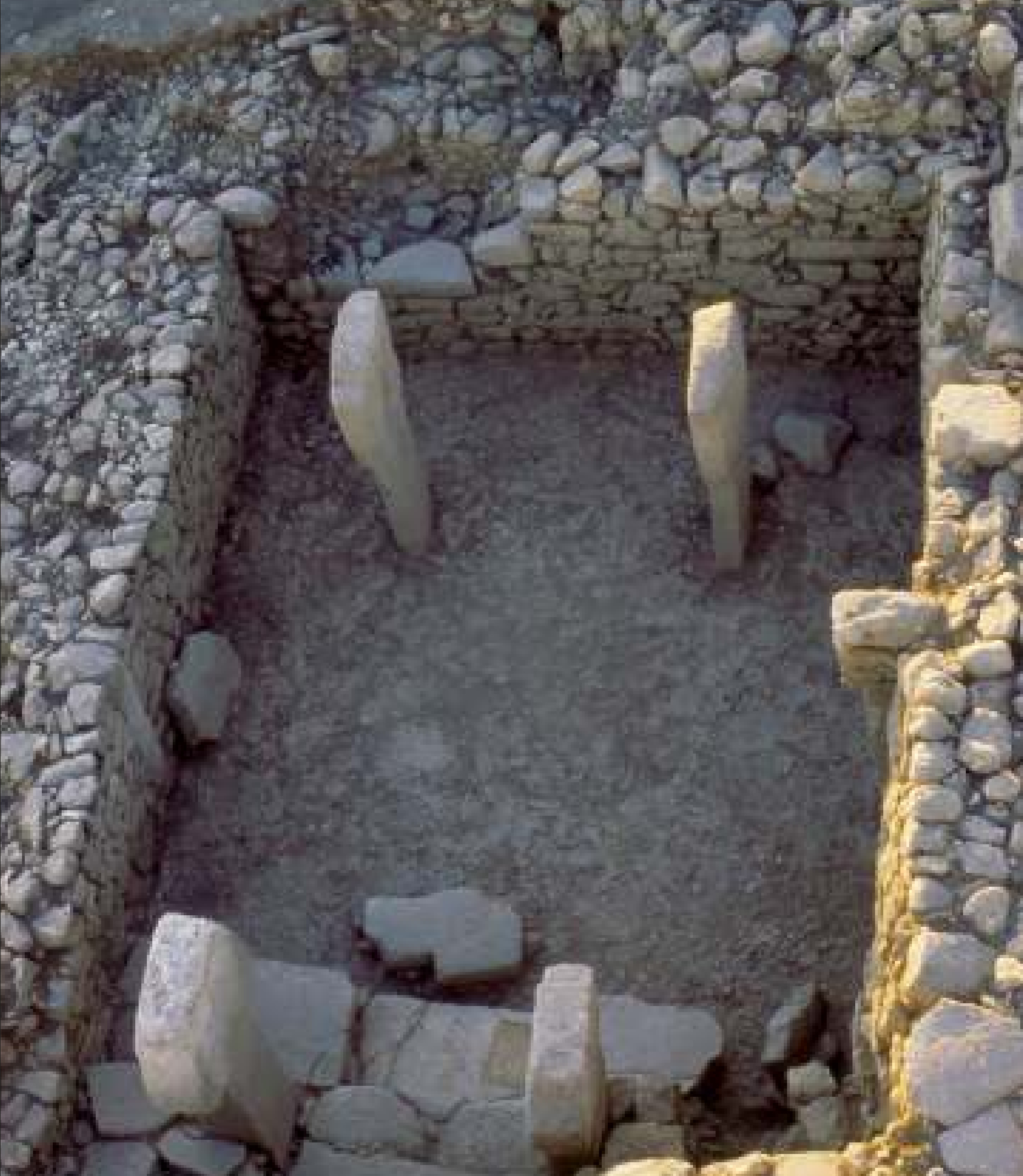
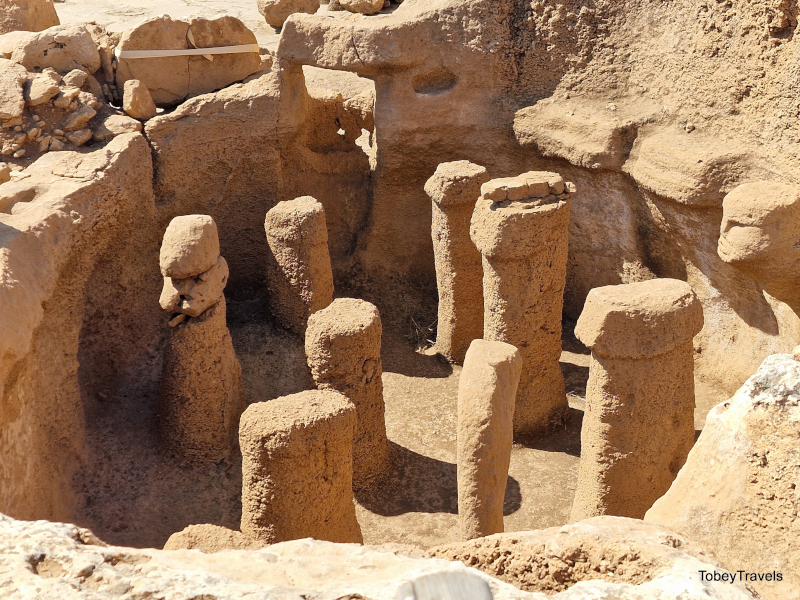
Under the soil are round and oval buildings between ten and thirty metres across, ringed by limestone pillars cut into a T shape. Most stand three to five metres high. The two in the centre of Building D reach about five and a half metres and weigh roughly eight metric tons each, and they were set into pedestals only twenty centimetres deep, carved out of the bedrock floor.
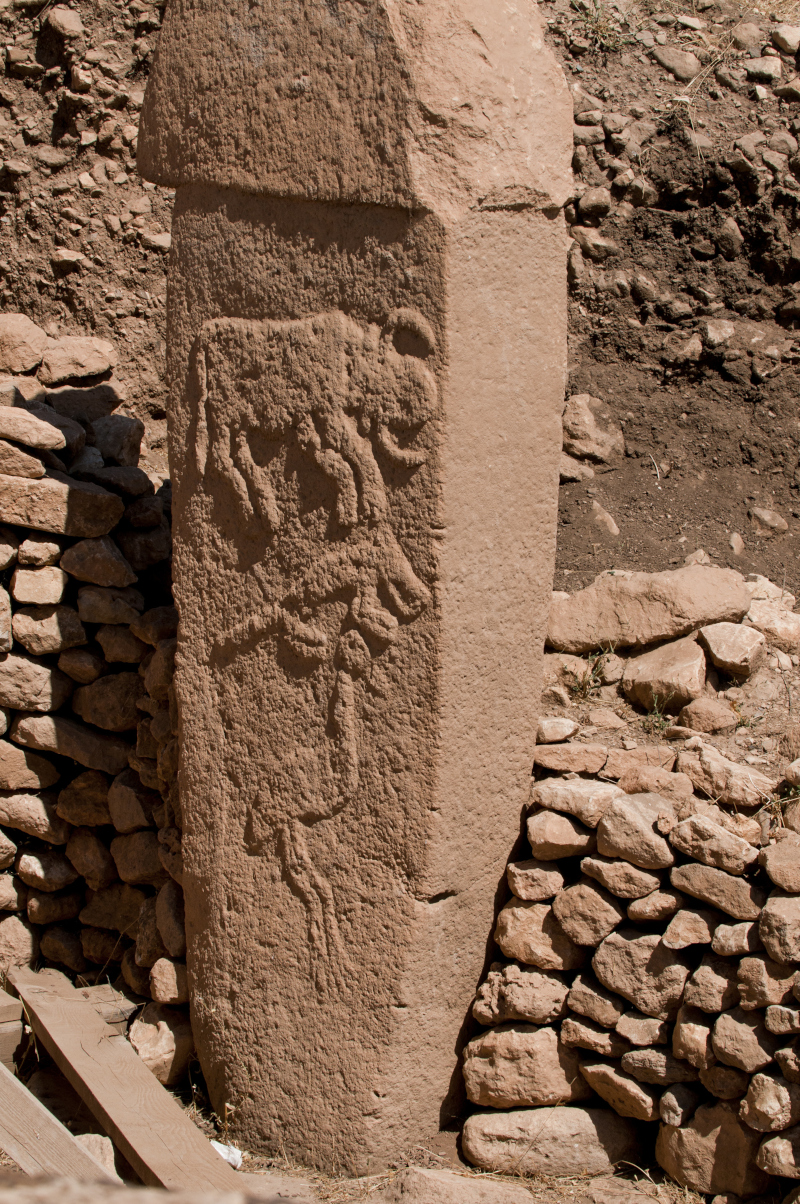
The pillars carry animals in low relief. Foxes, snakes, cranes, boar, aurochs, scorpions, vultures. All of them wild. The dangerous ones get the most stone.
The people who made them had no pottery, no metal, no writing, no wheel, and no domesticated crops that anyone can demonstrate.
- Case Status: Site confirmed and dated. Purpose, occupation and burial all under active dispute.
- Classification: Pre-Pottery Neolithic monumental site, southeastern Anatolia
- Location: Göbekli Tepe, Şanlıurfa Province, Turkey. Tell covering approximately 9 hectares.
- Recorded: 1963, by a joint Istanbul and Chicago university survey. Excavated from 1995 by Klaus Schmidt, German Archaeological Institute.
- Dating: Three charcoal samples from beside the ring wall of Enclosure D calibrate to 9664 to 9311 calBC at 95.4 percent confidence.
- Scale: More than sixty monumental T-pillars known. Geophysical survey indicates at least twenty or so further buildings still underground.
- Strongest evidence: The architecture itself, the published radiocarbon sequence, and three human skulls carved with deep grooves
- Weakest point: By the site’s own World Heritage nomination, less than ten percent of the tell has been excavated
For twenty years there was a clean story to tell about this place, and it was told everywhere. Hunter-gatherers built the world’s first temple before they built the first village. Religion came first. Agriculture followed, because a crowd that gathers to worship has to be fed.
That story belongs to Klaus Schmidt, the archaeologist who dug the site from 1995 until his death in 2014, and it is still the version most people have heard.
It is also the version that has been coming apart for fifteen years, and not mainly at the hands of outsiders. The hardest pressure on it has come from the excavation itself.
Background
The first thing to correct is the legend of the discovery, because the version that circulates is better drama and worse history.
In 1963 a survey run jointly by Istanbul University and the University of Chicago walked this hill. The surveyors did not miss what the material was. According to the German Archaeological Institute’s own account of the site’s research history, they identified the material at Göbekli Tepe as Neolithic. What they got wrong was the mounds: the report describes what the surveyor thought were two small Islamic cemeteries, and the significance of the place went past them.
So the hill was seen. It was walked, recorded, correctly dated in general terms, and published.
Then nobody came back to dig it for thirty years.
That is the actual strangeness of the discovery, and it is stranger than the usual telling. This was not a site hidden from science. It was a site filed by science and left alone.
In 1994 Klaus Schmidt was working in the region and, by the same account, visited every Neolithic site mentioned in the literature. He had excavated at Nevalı Çori, where T-shaped pillars had already come out of the ground, and that experience let him look at what the 1963 survey had taken for gravestones and recognise them as worked Neolithic pillars.
Excavation began in 1995 and has not stopped since.
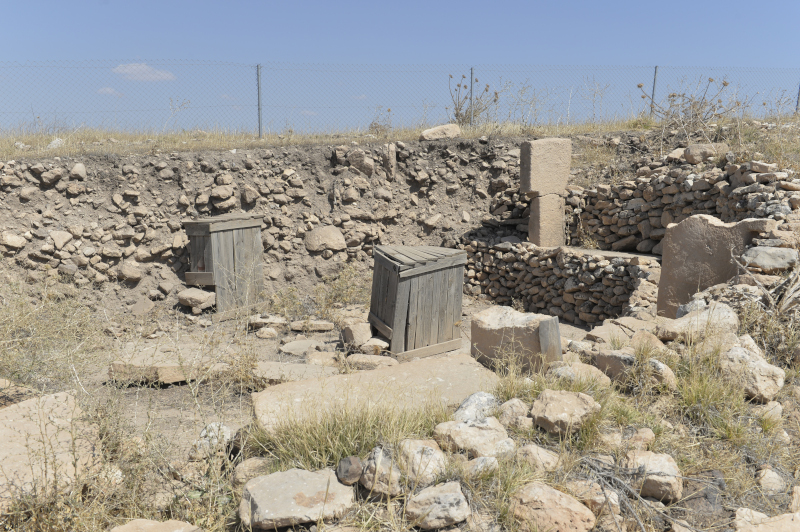
What came out of the ground was architecture that had no business existing at that date. The Pre-Pottery Neolithic A is the period when people in this part of the world were still hunting gazelle and gathering wild cereals. Nothing in that world is supposed to require an eight-tonne pillar.
Schmidt’s reading was that the circles were sanctuaries rather than dwellings, that the people who raised them came from a wide area, and that when a building had served its purpose it was deliberately filled in and buried. On top of that he built the larger claim: that the need to gather in numbers at places like this is what pushed people toward farming, and not the other way round.
Göbekli Tepe went onto the UNESCO World Heritage List in 2018.
Every part of Schmidt’s reading is now contested. The dating is not.
Timeline of Events
- c. 9600 to 8000 BC: Pre-Pottery Neolithic in southeast Anatolia and the Levant. The monumental phase at Göbekli Tepe, Layer III, belongs to the earlier part of it.
- 1963: Joint Istanbul and Chicago survey records the site. The material is identified as Neolithic. The mounds are described as two small Islamic cemeteries and the importance of the site is missed.
- 1994: Klaus Schmidt, working from his experience at Nevalı Çori, recognises the “gravestones” on the hill as Neolithic T-pillars.
- 1995: Excavation begins under Schmidt, for the German Archaeological Institute with Turkish partners.
- 2011: E. B. Banning publishes the argument that the buildings are houses rich in symbolism, not temples.
- 2012: Dietrich and colleagues report stone vats of up to 160 litres and chemical traces read as evidence for fermentation.
- 2013: Five samples from Layer III are submitted for AMS radiocarbon dating. Three charcoal ages from beside Enclosure D cluster between 9664 and 9311 calBC.
- 2014: Klaus Schmidt dies. The excavation continues without him.
- 2017: Sweatman and Tsikritsis read Pillar 43 as a record of a comet impact. The excavation team publishes a detailed rebuttal in the same journal. Gresky, Haelm and Clare publish three carved human skulls.
- 2018: Göbekli Tepe is inscribed on the UNESCO World Heritage List.
- 2019: More than 7000 grinding tools from the site are analysed and published. The authors read them as evidence of large work feasts.
- 2021: Turkey’s Ministry of Culture and Tourism launches Taş Tepeler, a programme covering twelve sites in the Şanlıurfa region.
- 2022: Netflix releases Ancient Apocalypse. The Society for American Archaeology writes to Netflix asking that the series be reclassified as science fiction.
- 2023: Dietrich and Wagner publish evidence that reliefs on the pillars of Building F were erased and recut repeatedly.
- 2024: Sweatman publishes a claim that the carvings encode a lunisolar calendar. Media coverage repeats it. Archaeologists take it apart.
- 2025: Subsurface scanning reported in October detects further enclosures, a large building, and smaller structures described as possibly early domestic buildings.
Key Evidence
There is no shortage of material here. That is the problem. Almost everything recovered at Göbekli Tepe can be read two ways, and the readings do not converge as the pile grows.
- The architecture: round and oval enclosures ten to thirty metres wide, with ten to twelve T-pillars each and two taller pillars in the centre.
- The published radiocarbon sequence for Layer III, including three charcoal ages from beside the ring wall of Enclosure D.
- Three partially preserved human skulls carrying deliberate deep grooves, one of them drilled.
- More than 7000 stone tools for processing plant food, including roughly 3400 handstones.
- The backfill itself: limestone rubble, flint flakes and large quantities of animal bone packed into the enclosures.
- The reliefs of Building F, which show repeated cycles of erasure and recutting.
The Pillars Are People
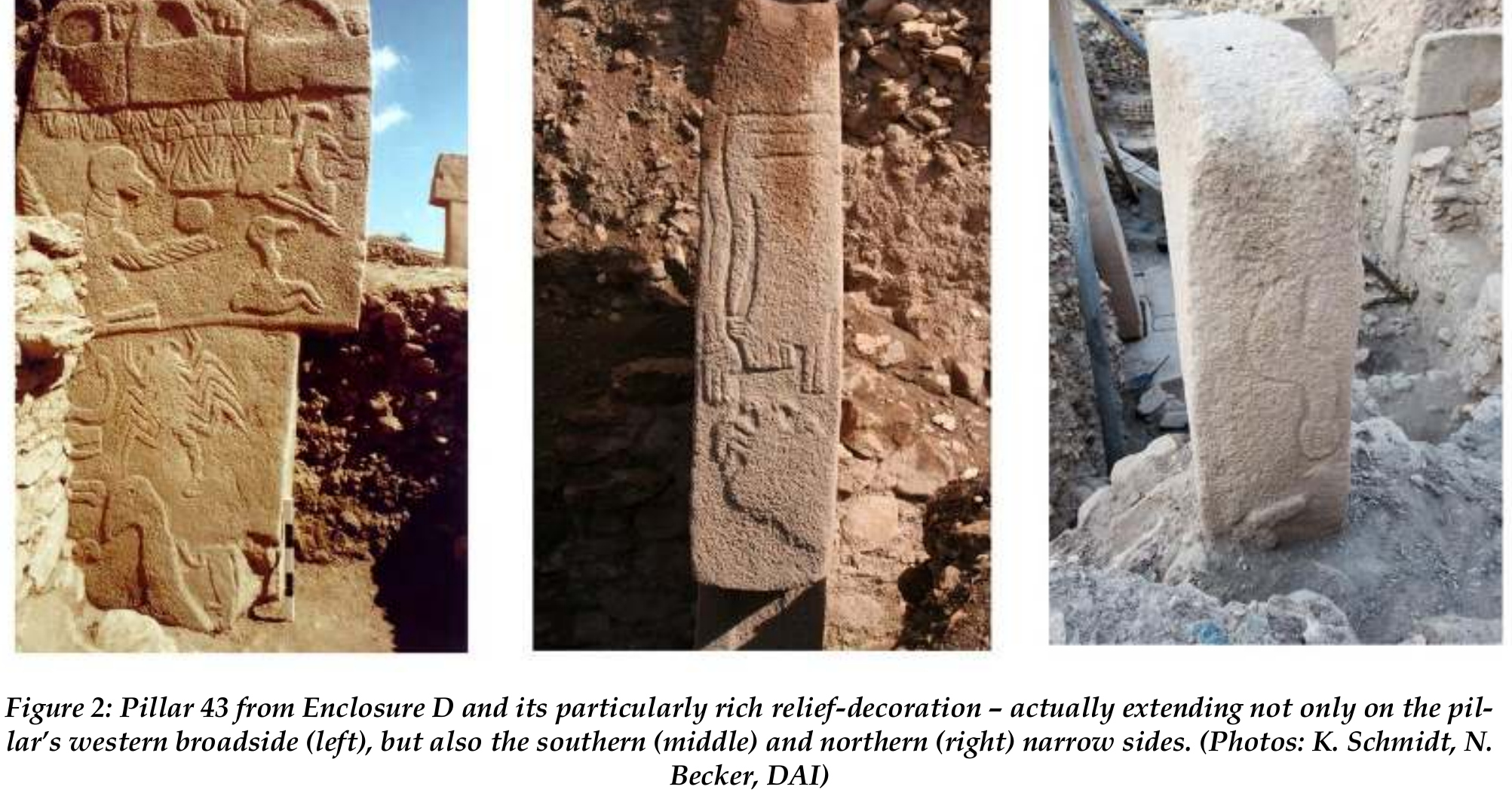
The T-shape is not decoration. On the central pillars of Building D there are arms carved down the shafts, hands brought together above the abdomen, and a belt with what reads as an animal-skin loincloth hanging from it. The nomination dossier calls them pillar-statues, and describes the narrow side of the T-head as the face.
They have no eyes, no mouths and no faces at all in the ordinary sense. Five and a half metres of limestone standing in a ring, shaped like a body, carrying no expression.
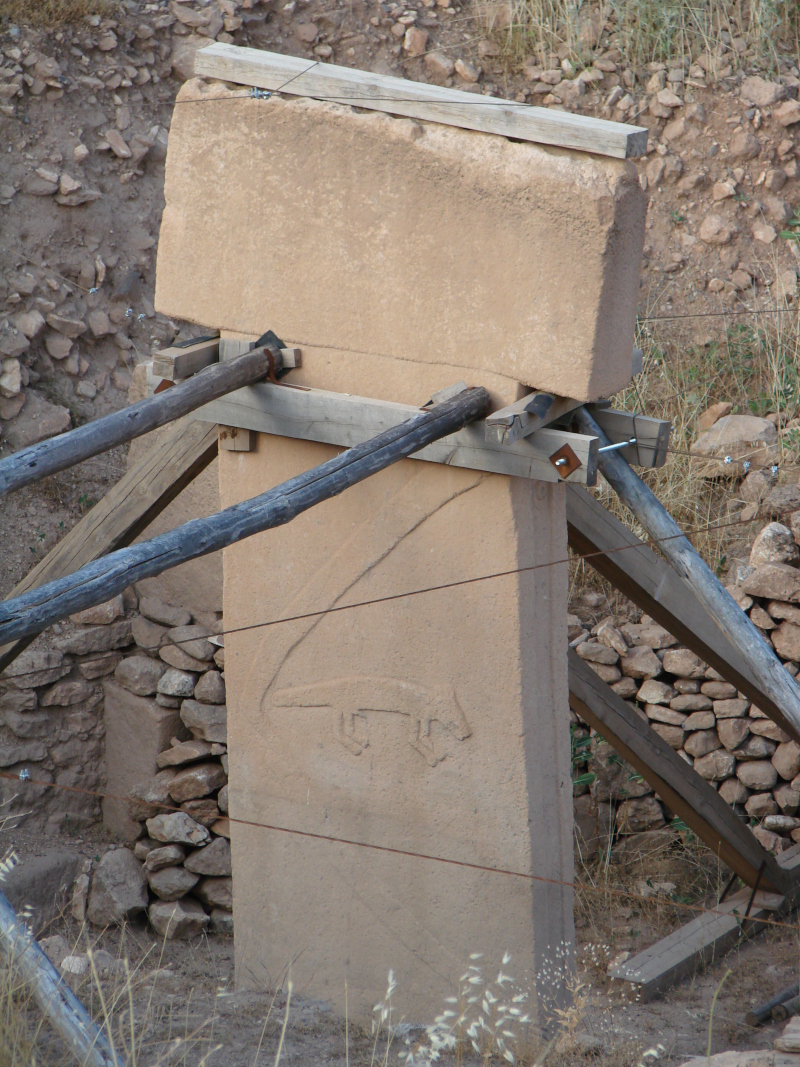
The animals are not random either. According to the excavation team, each enclosure carries its own emphasis: snakes in Enclosure A, foxes in B, boar in C, birds in D. Their own reading of that is that different social groups may have been responsible for different buildings.
More than sixty monumental T-pillars are known from the site. The iconography is not confined to them. It turns up on stone vessels, on shaft straighteners, on small plaques, and at other sites across the region.
What Is Actually Dated, and What Is Not
This is where most popular accounts of Göbekli Tepe go wrong.
Eleven deep soundings were dug down to bedrock to prepare for a protective shelter. They produced carbonised plant material, and from it a series of more than 150 samples was collected, on site or by flotation.
More than a hundred and fifty collected. Five submitted for AMS radiocarbon dating.
Of those, three charcoal ages from a sounding beside the ring wall of Enclosure D calibrate to between 9664 and 9311 calBC at the 95.4 percent confidence level. That is the number this case rests on. It is a range, not a date, and it is the honest form of the claim.
The specific figure of 9530 BC, which appears in a great deal of coverage of this site, does not come from the excavation’s radiocarbon work at all. In the documents held in this file it appears in the table of the archaeoastronomy paper the excavators refuted at length, where it is an astronomical epoch and not a measurement of anything in the ground.
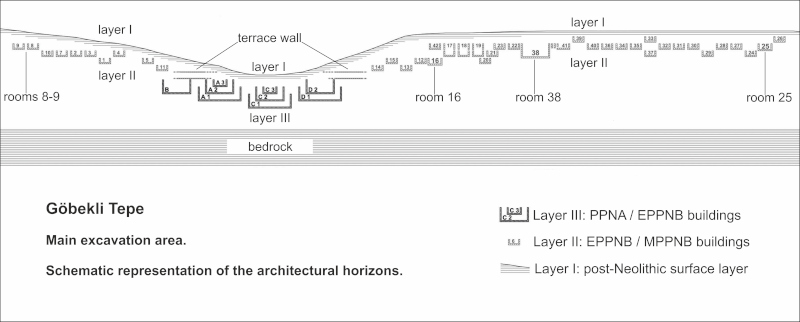
There is a second trap in the dating, and the excavation team named it themselves. The oldest date available for Enclosure D comes from organic material recovered from a wall plaster matrix. Plaster and backfill are not the act of construction. A charcoal fragment sealed in a wall tells you when the wall was repaired or when the material around it came to rest. The gap between that and the day the pillar was raised can run to centuries.
So the age of the place is firm. The age of any individual pillar is not.
The Skulls
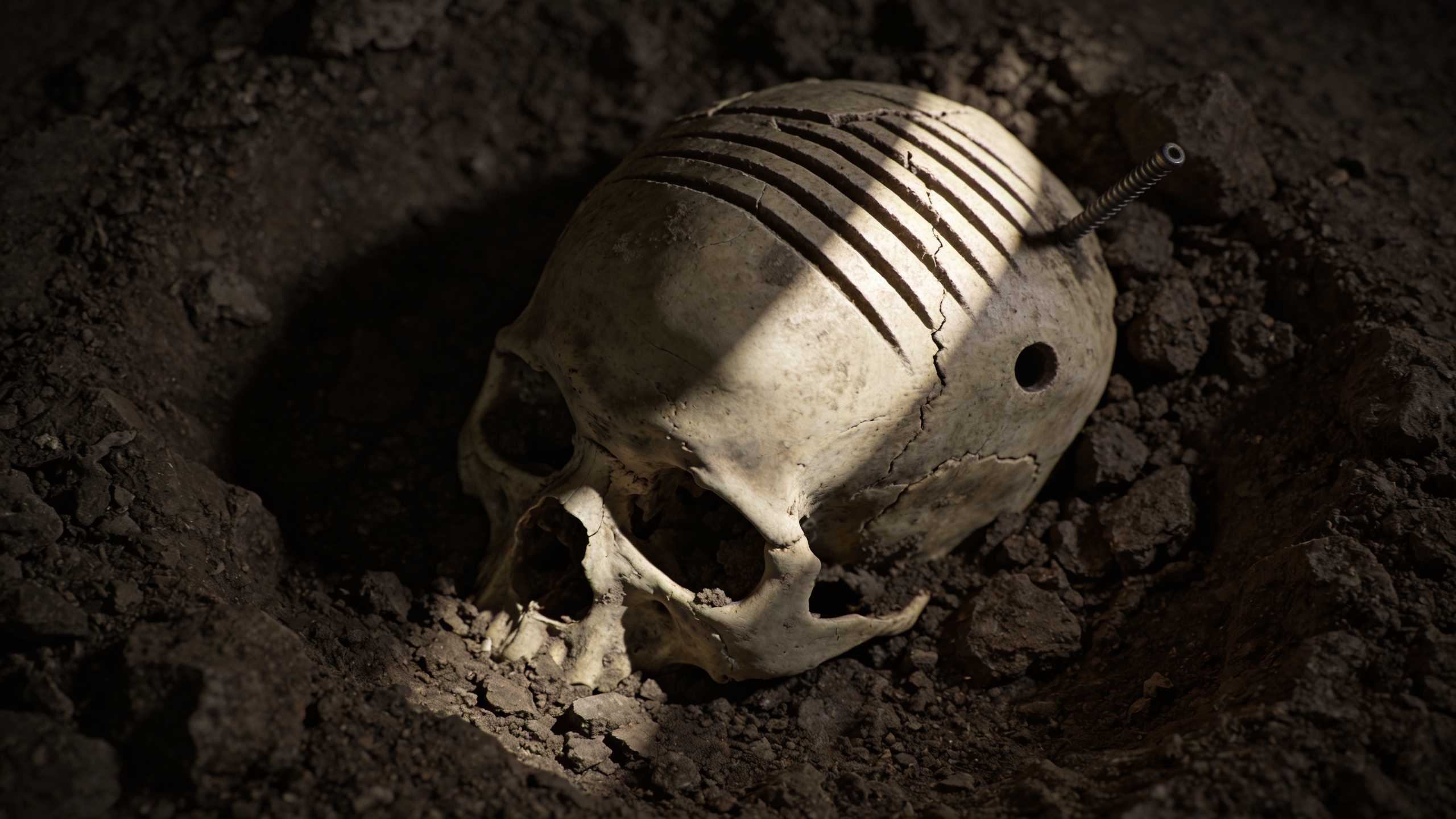
No burials have been found at Göbekli Tepe. What has been found is a considerable quantity of fragmented human bone in the fill, 691 pieces by the count published in 2017.
Three partially preserved skulls from that material carry modifications of a kind not previously recorded anywhere. Deep grooves cut along the sagittal axis of the skull, made by repeated cutting rather than a single stroke. One skull also carries a drilled perforation in the left parietal.
The team’s reading of the position of that hole is the detail that stays with you. It was placed, they argue, so that the skull could hang vertically and face forward.
Ochre traces were found adhering to fragments of that same skull, which had been deposited in a concentration of red ochre.
This is the least disputed strange thing at the site. Something was done to the dead here that has no parallel in the Neolithic record of Anatolia or the Levant.
Seven Thousand Grinding Tools
In 2019 the excavation published an analysis of more than 7000 artefacts connected with processing plant food: grinding bowls and slabs, pestles, mortars, and roughly 3400 handstones of basalt. Phytolith analysis confirmed what the charred remains were too poorly preserved to show, which is that cereals were present at the site in quantity.
That sounds like the end of the temple theory, and a lot of coverage treated it that way. The authors did not.
They found the grinding kit concentrated around the smaller rectangular buildings and on the terraces, they found no large storage facilities, and they read the seasonal pattern in the hunted gazelle bone as evidence for large work feasts. Food produced for immediate use by a crowd that assembles and then leaves.
The excavators make one more claim about food at this site, and it is the shakiest of them. Limestone vats cut to hold up to 160 litres were recovered at Göbekli Tepe, and tested positive for calcium oxalate, a compound that develops when cereals are malted and mashed. They published that in 2012 as evidence that beer was brewed for the gatherings, and called the result preliminary in their own words. Calcium oxalate forms by other routes too, and no second line of evidence for brewing appears in the publications held in this file.
That is a third answer, and it belongs to neither camp cleanly.
Official Explanation
The version in the official documents is Schmidt’s, softened.
The World Heritage nomination and the ICOMOS evaluation describe the monumental enclosures of Layer III as having been intentionally backfilled. They describe the buildings as appearing to have been completely emptied before that happened. They treat the site as ritual architecture raised by hunter-gatherers before the establishment of farming, which is what makes it worth inscribing at all.
The dating of the monumental phase and the authenticity of the architecture are not in dispute by anyone working on the site.
The World Heritage nomination states that less than ten percent of the tell has been excavated. The ICOMOS evaluation repeats the figure independently and adds that geophysical survey indicates at least twenty or so other buildings on the site.
The commonly repeated figure that only five percent has been dug has no source in any document held in this file.
The nomination also records the scale of what is still down there in plainer terms: more than ten large buildings were located on the geophysical map in addition to the eight already under excavation.
Read the official documents and the excavation’s own publications side by side and something becomes visible that neither says out loud. The institutional description of Göbekli Tepe is a description of a site whose interpretation was fixed while nine tenths of it was still underground.
Alternative Theories
They Are Houses
In 2011 the Canadian archaeologist E. B. Banning published the argument that the buildings at Göbekli Tepe are not temples but houses, unusually large and unusually decorated, and that the modern instinct to separate sacred buildings from domestic ones is being imported into a period that may not have made the distinction.
The excavation team answered in print, arguing that the scale, the labour and the imagery are not explicable as ordinary dwellings.
Then the site itself started supplying Banning with material. Cisterns. Water management. Rectangular buildings with their own smaller pillars. Seven thousand grinding tools. Subsurface scanning reported in October 2025 found further enclosures, a large building, and smaller structures described by the team as possibly early domestic buildings, a reading given weight by Barbara Horejs of the Austrian Archaeological Institute.
Banning restated his case in 2023, a decade after the first paper. The dispute is not closed and has not narrowed much.
Verified fact: tools for processing cereals were recovered at Göbekli Tepe in thousands. Speculation: that this makes the enclosures dwellings. The excavators who published the tools read them as feasting equipment, not as household kit.
Nobody Buried Anything
Schmidt’s most cinematic claim is that the enclosures were deliberately filled in, on purpose, as a rite. It is the image that gives the site its atmosphere: people burying their own temple.
Banning argued instead that the fill is what a hillside does over time. Julia Schönicke, examining abandonment practices at the site in a 2022 paper, argued against the ritual reading as well, and for sediment moved down from higher slopes.
The counter-evidence is real. The fill contains flint flakes, limestone rubble and a great deal of animal bone, which looks like material carried in rather than material slumped in. But an argument that the deposit is at least partly natural is now held by more than one specialist, and it was never settled by excavation, only asserted.
The Stone Did Not Stay Still
The quietest finding in this file may be the one that does the most damage to everybody’s theory at once.
In 2023 Oliver Dietrich and Julia Wagner examined the pillars of Building F closely and found repeated phases of erasure and re-carving. Images were cut, ground away and cut again. Their conclusion is that stone here was not chosen because it preserves a message but because it can be reworked, over and over, for as long as anyone keeps coming back.
If the surfaces were being rewritten, then no single relief is a fixed record of anything. That cuts against the romantic reading of the site as a message left for the future. It cuts considerably harder against anyone who wants to read a specific relief as a dated record of a specific event.
Pillar 43 as a Comet Record
Pillar 43 in Enclosure D is the famous one, the Vulture Stone. A large bird with outstretched wings, a disc above it, a scorpion, a headless human figure, rows of arch shapes along the top.
In 2017 Martin Sweatman and Dimitrios Tsikritsis read the animals as star constellations and the composition as a date stamp: a record of a comet impact around 10,950 BC, give or take 250 years, at the onset of the Younger Dryas cold period.
The team who excavated the pillar published a detailed response in the same journal. Their objections are specific rather than dismissive.
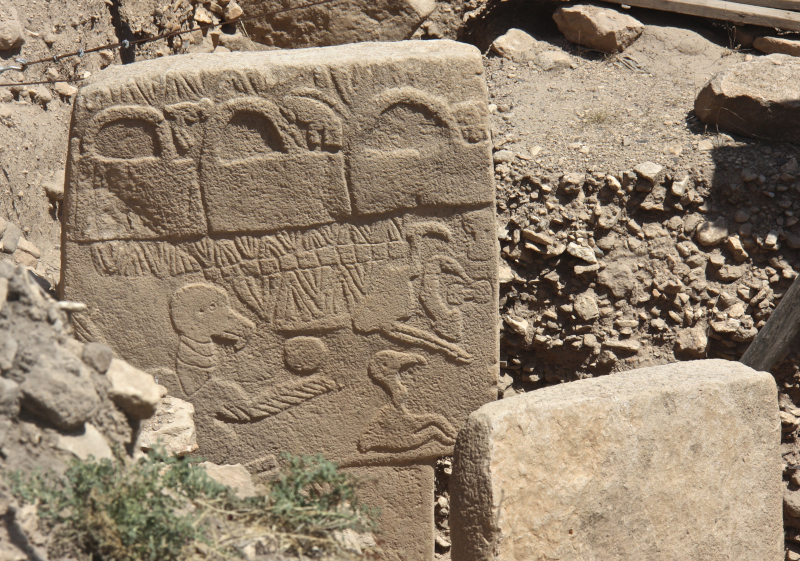
The date does not work: 10,950 BC is still 700 to 1000 years older than the oldest radiocarbon date available for Enclosure D, and the earliest dates from the site fall at the end of the Younger Dryas rather than its beginning. The assumption that constellations stay stable across ten millennia and across unrelated cultures is not defensible. The study takes a handful of pillars out of a site with more than sixty of them and an iconography that runs across whole classes of object and across the region. And the headless figure read as a symbol of death and extinction has a clearly emphasised phallus, which the excavators argue contradicts a lifeless reading.
Sweatman and Tsikritsis replied in the same volume, defending their method. Both texts sit in the same issue, and both are in this file.
In 2024 Sweatman escalated the same reading into a claim that the carvings encode a lunisolar calendar with eleven extra days. The press carried it without much resistance. Archaeologists went through it publicly and did not accept it.
Sweatman’s is not the only astronomical reading on offer. Giulio Magli proposed in 2013 that the enclosures were oriented on the rising of Sirius, a different hypothesis with a different mechanism, unaccepted by the excavation team and unconnected to comets. The existence of two incompatible sky readings of the same stones is itself a fact about how much these carvings will let you project onto them.

A Lost Civilisation Taught Them
Graham Hancock’s Ancient Apocalypse, released by Netflix in 2022, uses Göbekli Tepe to argue that survivors of an advanced civilisation destroyed at the end of the last ice age passed knowledge to hunter-gatherers.
The Society for American Archaeology wrote to Netflix on 30 November 2022 asking that the series be reclassified as science fiction. Hancock answered publicly. The argument moved onto podcasts, most visibly a four hour debate between Hancock and the archaeologist Flint Dibble in 2024, and into general news coverage.
The claim is straightforward to state and straightforward to check. No excavation report from the site describes material from an earlier or more advanced culture. There is flint, limestone, bone and basalt, worked by people using flint, limestone, bone and basalt. What the site does show is that the capability to organise this kind of labour existed far earlier than the textbooks allowed, which is a genuinely large revision and does not require anybody from outside to deliver it.
It Was Never Alone
The single most corrosive fact for the “unique miracle” framing came from ordinary fieldwork.
Göbekli Tepe is not an isolated site. It is one of a group. Since 2021 the Turkish Ministry of Culture and Tourism has run Taş Tepeler, a programme covering twelve sites in the Şanlıurfa region. Karahan Tepe, some forty kilometres away, has its own T-pillars, its own enclosures, and human heads carved out of the living rock.
A site that stands alone looks like a miracle or an intrusion. A site that turns out to be one node in a regional network of related places, sharing a symbolic language, looks like something people developed.
- Sanctuary built by hunter-gatherers: Supported by the architecture, the imagery and the absence of ordinary domestic debris in the monumental buildings. Weakened by everything found since 2018.
- Houses rich in symbolism: Supported by the grinding tools, the cisterns and the smaller structures. Weakened by the scale and the labour cost of the central pillars.
- Deliberate ritual burial of the enclosures: Supported by the bone and flint content of the fill. Contested by at least two specialists who read part of the deposit as natural slope movement.
- Pillar 43 as a comet record: Answered point by point by the excavation team, and off by 700 to 1000 years against the site’s own radiocarbon dates.
- Lost advanced civilisation: No material support reported from the site in any excavation publication. Formally objected to by a national archaeological body.
- Regional phenomenon rather than a single wonder: Supported by twelve sites and by Karahan Tepe’s own pillars and carvings.
Unresolved Questions
Some of these have been open since the first season of digging. Others come out of the last five years of publications and are asked here.
- If the T-pillars are bodies, whose bodies? They have arms, hands, belts and loincloths, and no faces at all.
- Where are the dead? Nearly seven hundred fragments of human bone have come out of the fill and not one grave has been found.
- Why was a skull drilled so that it could hang and face forward, and what was it hanging in?
- Who fed the people who cut an eight-tonne pillar out of bedrock, in a world with no farms and no storage buildings?
- If the reliefs of Building F were erased and recut repeatedly, how many other pillars are carrying their third or fourth image, and how would anyone tell?
- What date belongs to the pillars themselves, as opposed to the plaster, the fill and the charcoal beside the walls?
- Why did a site recorded and correctly identified as Neolithic in 1963 wait thirty years for a spade?
- If more than ninety percent of the tell is still underground, on what basis is any interpretation of the place currently being defended?
- Why does each enclosure favour a different animal, and does that mean different groups, different times, or something no living person has a word for?
None of these has an answer in the material published so far. Together they describe a site that has been explained to the public far more confidently than it has been excavated.
Where It Stands
The strange thing about Göbekli Tepe is that the part which should be uncertain is solid, and the part which should be simple is not.
The hard physics holds. Charcoal from beside the ring wall of Enclosure D gives a calibrated range, published, reproducible, and old enough to be genuinely difficult. People with no pottery, no metal and no agriculture raised monumental architecture. Nobody working on this site disputes that.
What nobody can demonstrate is what the buildings were for, whether anyone lived in them, or whether the earth inside them was put there by hands or by weather.
- CONFIRMED, 95 to 100 percent: The monumental enclosures exist and belong to the Pre-Pottery Neolithic. Three charcoal samples from beside Enclosure D calibrate to 9664 to 9311 calBC at 95.4 percent confidence. Three human skulls carry deliberate carvings, one of them drilled. More than 7000 plant-processing tools were recovered. Less than ten percent of the tell has been excavated.
- PROBABLE, 60 to 90 percent: That people were present at the site for extended periods rather than visiting an empty shrine. That Göbekli Tepe belongs to a regional network of related sites rather than standing alone. That the reliefs on at least some pillars were recut over time.
- POSSIBLE, 20 to 50 percent: That the enclosures were deliberately backfilled as a rite, roughly 45. That they functioned primarily as sanctuaries rather than dwellings, roughly 45. That fermentation was practised in the stone vats, roughly 40.
- DISPUTED or DEBUNKED: The specific construction date of 9530 BC. The claim that more than 150 samples were dated. The figure of five percent excavated. Pillar 43 as a record of a comet impact, or as a lunisolar calendar. A lost advanced civilisation behind the builders. The story that the 1963 survey dismissed the site as a medieval cemetery.
The confirmed column is documented to the page, and most of those pages are in this file. The probable column is where the argument actually lives, and it has been moving steadily in one direction: away from the empty temple, toward a place where people stayed, worked, ate and came back.
The disputed column deserves a closer look, because four of those entries are not fringe claims. They are numbers repeated by serious outlets, and every one of them dissolves when you open the primary document. A date that exists only in a refuted paper. A sample count that confused collecting with dating. An excavation percentage with no source at all. A discovery story that turns the 1963 surveyors into fools when the record shows they read the material correctly.
That last one matters more than it looks. The real history is worse for us, not better. Göbekli Tepe was found, identified and written down, and then the world of archaeology walked past it for thirty years. Nobody had to be blind. It was enough that nobody came back.
The men and women who cut these pillars had no way of writing their names, and no reason to think anyone would ever ask.
They left a ring of faceless stone bodies with their hands folded, a skull drilled to hang facing forward, and nine tenths of a hill nobody has opened.
Every document named on this page, and the ones that did not fit, is filed and tagged in the Evidence Files dossier for this case.
What is held on record. What is only linked. And what is repeated everywhere with nothing underneath it.
“Oblivion is not to be hired: The greater part must be content to be as though they had not been.” — Sir Thomas Browne
Unsolved Files. The truth was never meant to be found.

