
The Wow! Signal: A Whisper from the Edge of Knowing
It lasted 72 seconds. Long enough to register. Short enough to vanish before anyone could be sure.
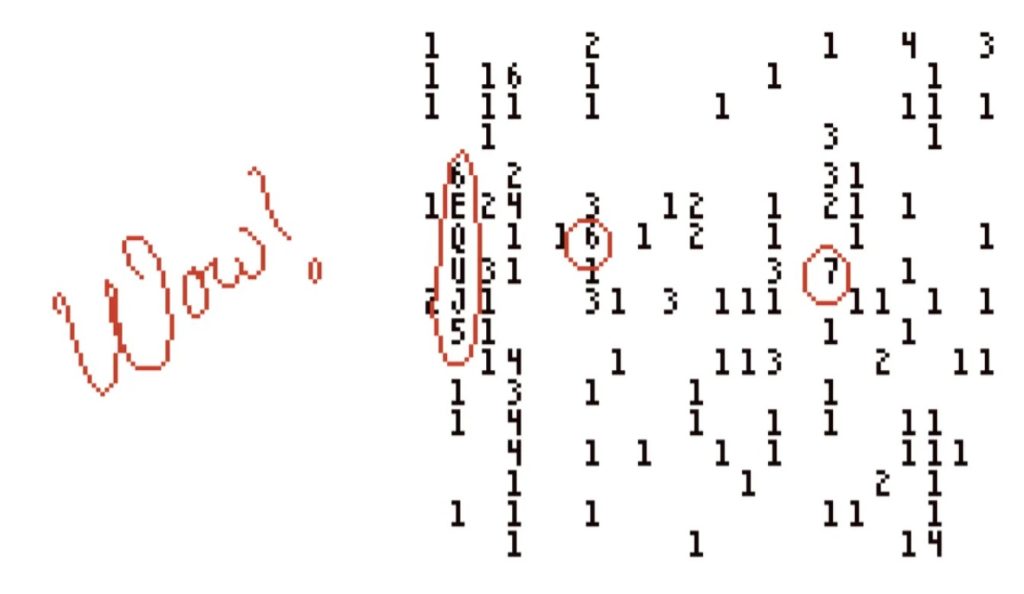
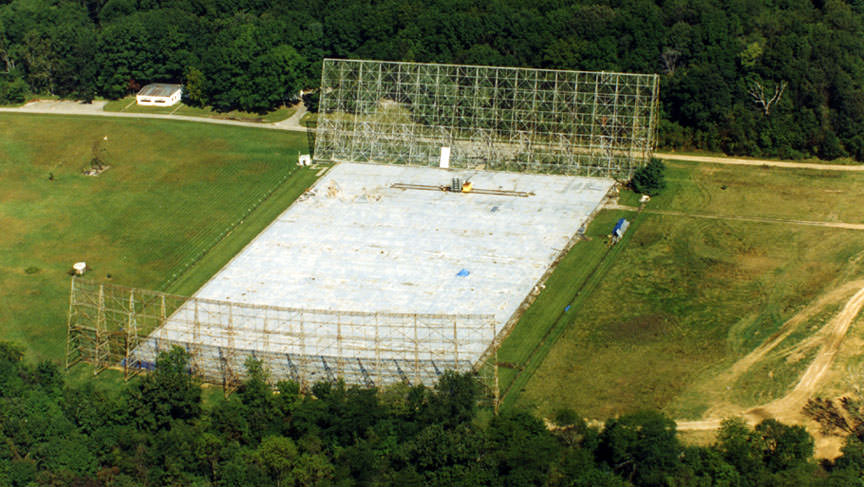
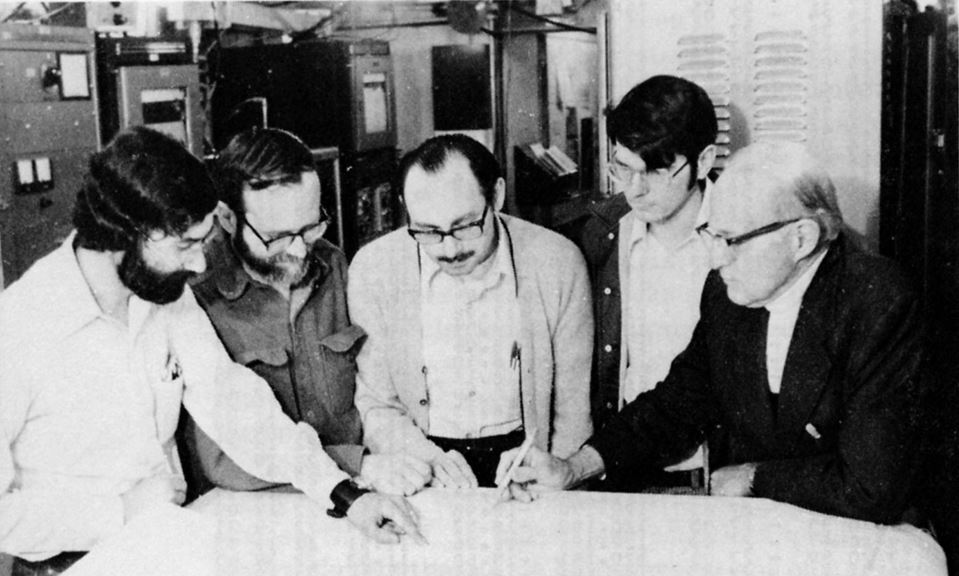
On the night of August 15, 1977, the Big Ear radio telescope at Ohio State University recorded a signal so anomalous that astronomer Jerry R. Ehman, upon reviewing the computer printout days later, circled the alphanumeric string “6EQUJ5” and wrote a single word in red ink: “Wow!”
He was not a man given to exclamation. He was a mathematician, a skeptic, a volunteer for SETI not out of belief, but out of discipline. Yet what he saw defied every category he knew.
The Frequency That Binds the Cosmos
The signal arrived at 1420.4556 megahertz—a whisper away from 1420.4058 MHz, the natural emission frequency of neutral hydrogen, the most abundant element in the universe.
This is not a random number. It is a cosmic constant. In the 1950s, physicists Giuseppe Cocconi and Philip Morrison proposed that any civilization attempting interstellar communication would use this frequency—not because it is magical, but because it is universal. A place where the static of the universe falls quiet. A natural meeting point.
The Wow! Signal did not merely appear near this frequency. It inhabited it—with a narrow bandwidth (under 10 kHz), a clean Gaussian rise and fall, and an intensity 30 times greater than the background hum of deep space. Natural phenomena—pulsars, quasars, masers—scatter energy across broad spectrums. This was focused. Deliberate. Engineered.
The Silence That Followed
What makes the Wow! Signal haunting is not what it was—but what it wasn’t: repeated.
For over four decades, astronomers have returned to that patch of sky in Sagittarius. The META project. Project Phoenix. The Very Large Array. The Green Bank Telescope. Breakthrough Listen. Over 50 dedicated searches. Millions of dollars. Thousands of hours of observation.
Nothing.
No echo. No harmonic. Not even a ghost of a similar pattern. It was as if the universe had spoken once—and then sealed its lips forever.
Robert H. Gray, an independent researcher who spent two decades chasing the signal, described the experience as “listening for a voice in an empty cathedral.” You know someone was there. You heard the note. But the hall is silent now, and you’re left wondering if you imagined it.
The Comet That Wasn’t
In 2017, a paper suggested comets 266P/Christensen and P/2008 Y2 released clouds of hydrogen that mimicked the signal. The explanation spread quickly—it was tidy, terrestrial, safe.
But orbital records show neither comet was near the observed coordinates in August 1977. More critically, cometary hydrogen emits broadband radiation, not the razor-thin spike Big Ear detected. As Seth Shostak of the SETI Institute noted: “If comets made the Wow! Signal, they’d be the only objects in the cosmos that behave like shortwave radio towers.”
The theory persists not because it convinces scientists—but because it comforts us. We prefer a wrong answer to no answer at all.
What If It Was Real?
Suppose, for a moment, that it was exactly what it appeared to be: a directed transmission from a civilization light-years away.
The implications are staggering. The signal would have been sent decades, perhaps centuries, before 1977. Its senders may have vanished long before we heard it. Or perhaps they listened in return—and chose not to reply.
Ehman himself never claimed proof. “It’s the best candidate we have,” he said, “but without verification, it remains a curiosity, not a conclusion.”
The Enduring Question
The Big Ear telescope was dismantled in 1998. A golf course now occupies its former site. The original printout, fragile and yellowed, sits in an archive—a relic of a night when the universe seemed to lean closer.
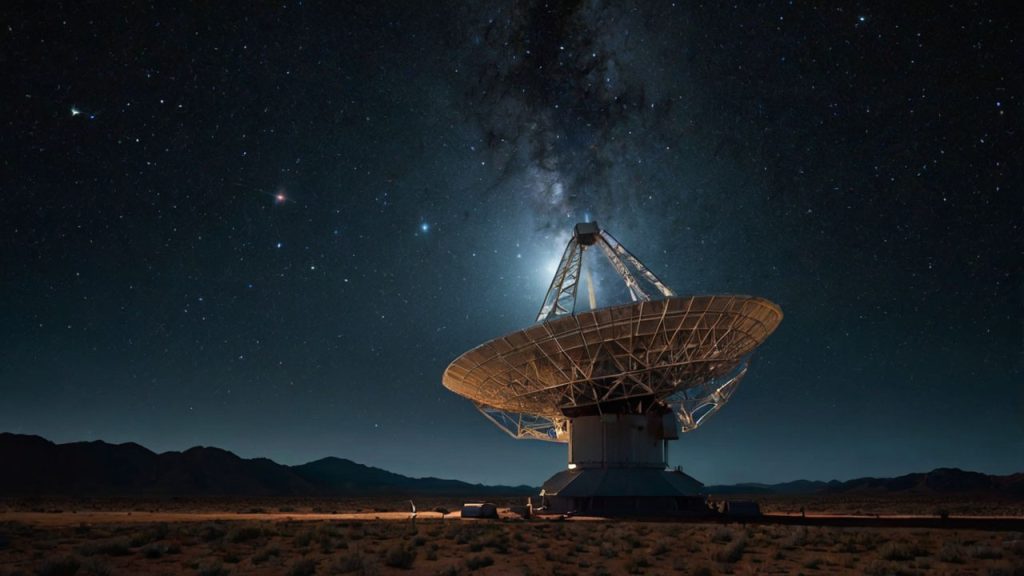
We may never know what caused the Wow! Signal. But its legacy endures as a quiet reminder: the cosmos is under no obligation to repeat itself. Some truths are offered once. To catch them, you must be listening—and willing to live with the silence that follows.
Archival Materials
For researchers and the deeply curious, we’ve compiled the original Big Ear printout, technical analyses of the “6EQUJ5” code, and Ehman’s notes into a reference dossier.

